Introducing Bloxtel AP 201
All-in-one 5G box.
A 5G small cell radio and a complete standalone network core, running together in one passively cooled enclosure that mounts to a wall or pole.
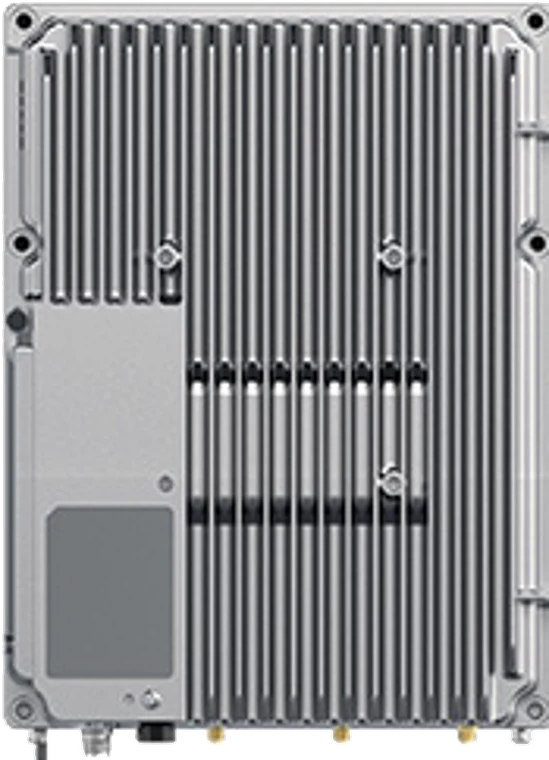
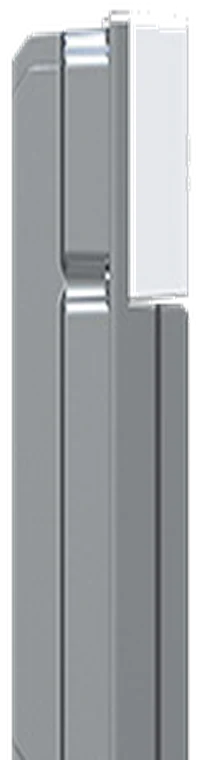
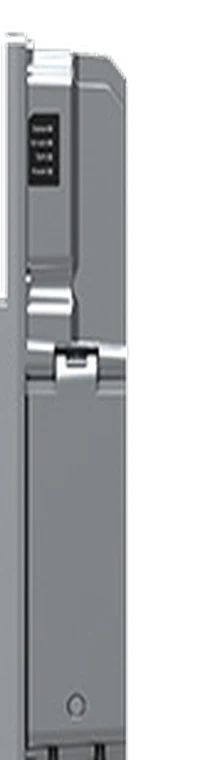
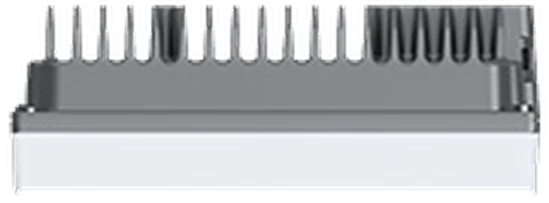
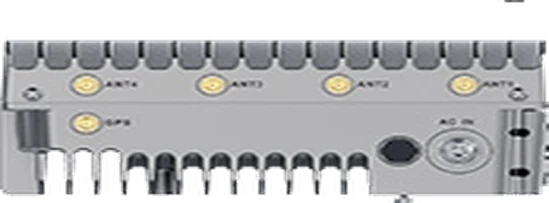
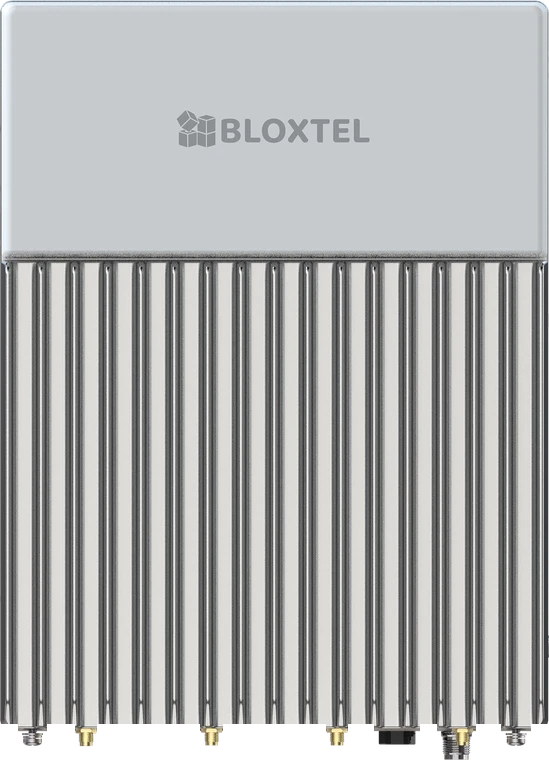
Available in December 2026
What's inside
A whole operator, stacked into one enclosure.
Deploying private 5G normally means a radio from one vendor, a centralized core in a remote data center, and a management plane bolted across the two. The AP 201 puts the radio, the core (control and user planes) and management on one board, talking over internal interfaces, not a WAN.
The platform
Decentralized and autonomous.
The AP 201 is the hardware. Underneath it sits dSIM®, Bloxtel's breakthrough approach to running a 5G network: identities are cryptographic and tokenized, the core fully runs at the edge, and none of your traffic depends on a third party's servers.
reduction
No single point of failure, and tokenized identity, so neither an incident nor an attacker takes operations down.
Why 70%?reduction
Local breakout and packet loss mitigation put real-time processing next to the devices that need it.
Why 80%?reduction
Decentralized and autonomous infrastructure leads to a near zero CAPEX and OPEX network.
Why 90%?increase
Growing the 5G network means adding self-contained units, not scaling a shared bottleneck cloud infrastructure.
Why 10×?PATENTED dSIM® TECHNOLOGY
Things a conventional 5G network cannot do.
Asymmetric authentication
No shared secrets
Devices connect with public key cryptography. We call it 6G AKA, against the symmetric 5G AKA that everyone else runs.
Identity tokenization
No SMS codes
Every subscription carries a tokenized proof of ownership, which closes the SIM swap attack costing the industry $100M+ a year.
Electronic subscriptions
No plastic SIMs
Order, issue and manage subscriptions in a click. It works with eSIM-capable and older devices alike.
Integrity verification
No blind trust
Secure boot and runtime integrity measurement on every access point, with an alert the moment tampering is detected.
Intelligent slicing
No flat APN
Dedicated virtual APNs with QoS rules and AI policy enforcement, so low and high priority apps share a site without fighting.
Confidential access
No vendor cloud
Traffic to and from your devices never transits a third party's network function server. Your network, your data.
Blockchain
No cloud in the middle.
A typical 5G network rents its core from a vendor. That cloud is a recurring cost, a single point of failure, and a third party that subscriber traffic has to pass through. The AP 201 runs the core itself and uses the chain only for the one thing a network genuinely cannot self-certify: who owns what.
Conventional private 5G
Bloxtel
The chain never carries subscriber data. It records who owns which access point and who holds which subscription, so both are verifiable. Everything else, including registration, session setup and user traffic, happens on the box and stays on the site.
Tokenization
Infrastructure anyone can hold a piece of.
A 5G access point is a real-world asset: costly to build, fixed in place, and now ownable in pieces that can earn on their own.
Tokenized hardware
AP Token
Every access point mints one at personalization. It is the unit's identity: provable, transferable with the hardware, and impossible to clone.
0xB470FFF9…80B09823d ↗Tokenized subscription
dSIM® Token
Minted at activation. Its holder can opt in to passive network testing: real coverage and signal data from an actual device, not a drive-test truck.
0x540E8fF1…136d6b244 ↗01
Capital
A third party funds a unit, or a fraction of one, anyone underwriting coverage they want.
02
Deployment
The access point goes up and mints its token: ownership as public record, not a contract in a drawer.
03
Revenue
The unit earns neutral-host fees from operators who'd rather pay than build their own.
04
Return
Earnings settle to whoever holds the token, split as finely as ownership. Sell it, income included.
Liquidity returns to the asset
Spectrum
Licensed-grade coverage, without the license.
The AP 201 ships as an n48 (CBRS) or an n78 build, one radio per unit, chosen at order. On n48 a Spectrum Access System grants the channel dynamically and the unit configures its carrier to match, so you get coordinated, interference-managed spectrum without buying any.
United States
Channel width, center frequency and transmit power are all set from the SAS grant at registration, then re-checked on every heartbeat. The channel shown is representative; the actual grant depends on what the SAS allocates at your site.
Backhaul Connectivity
Two ports. Most sites use one.
The default install is a single Ethernet cable. Management, operator access and subscriber internet all share it. If the site has a fast uplink, the SFP+ takes user traffic off the copper entirely, and nothing about the software layout changes. Optionally, backhaul can come from a satellite terminal wired into the same RJ45 port for non-terrestrial connectivity.
Port 1 · RJ45
2.5 Gb Ethernet
Default single cableCarries operator management, SSH, and the subscriber internet uplink, NAT'd in the kernel. It is also how neighboring access points reach each other for core redundancy and handover.
Port 2 · SFP+
10 Gb fiber
Optional fast backhaulCable it and subscriber traffic egresses straight from the DPDK user plane at 10 Gb, translated by the on-box NAT. It carries user data only, never management and never signaling.
Trust Anchor
Keys that never leave the silicon.
An access point that mints subscriber identities has to be trustworthy itself. The AP 201's private keys are generated and used inside a hardware-backed key store on the SoC.
- Hardware key store. A TEE-backed PKCS#11 module on the root filesystem, not a software HSM.
- Asymmetric subscriber auth. dSIM® credentials authenticate with ECDSA certificates rather than a shared symmetric secret.
- Registered on a public ledger. Personalization mints an AP Token on-chain, giving each unit an identity anyone can verify independently.
- Survives its own updates. Identity and configuration live on a preserved partition, so an OS update doesn't force re-personalization.
Graham
Your AI network engineer, built in.
Graham monitors a constant stream of logs produced by the AP 201 and collaborates with other trusted agents in your 5G network for 24/7 availability.
- Watches everything, live. Graham follows every 5G network function, from the AMF to the UPF, as each new event is written.
- Understands the whole network, not just the logs. Graham connects what it sees in the core with the Operator dApp, so you can ask about network activity in natural language, from one place.
- Acts before you have to. Graham catches faults early, prioritizes them by urgency and warns you before related failures cascade.
- Backed by Graham Cloud. Complex incidents are handed to a larger model in Graham Cloud. Lessons from across the fleet make every access point smarter as the network grows.
Deployment
As simple as setting up enterprise Wi-Fi.
We ship an Operator Starter Kit. It has two parts, and between them they are the entire network. A certified technician is assigned to your organization to get the first site live. Your AI agent becomes your dedicated site technician.
Mount it.
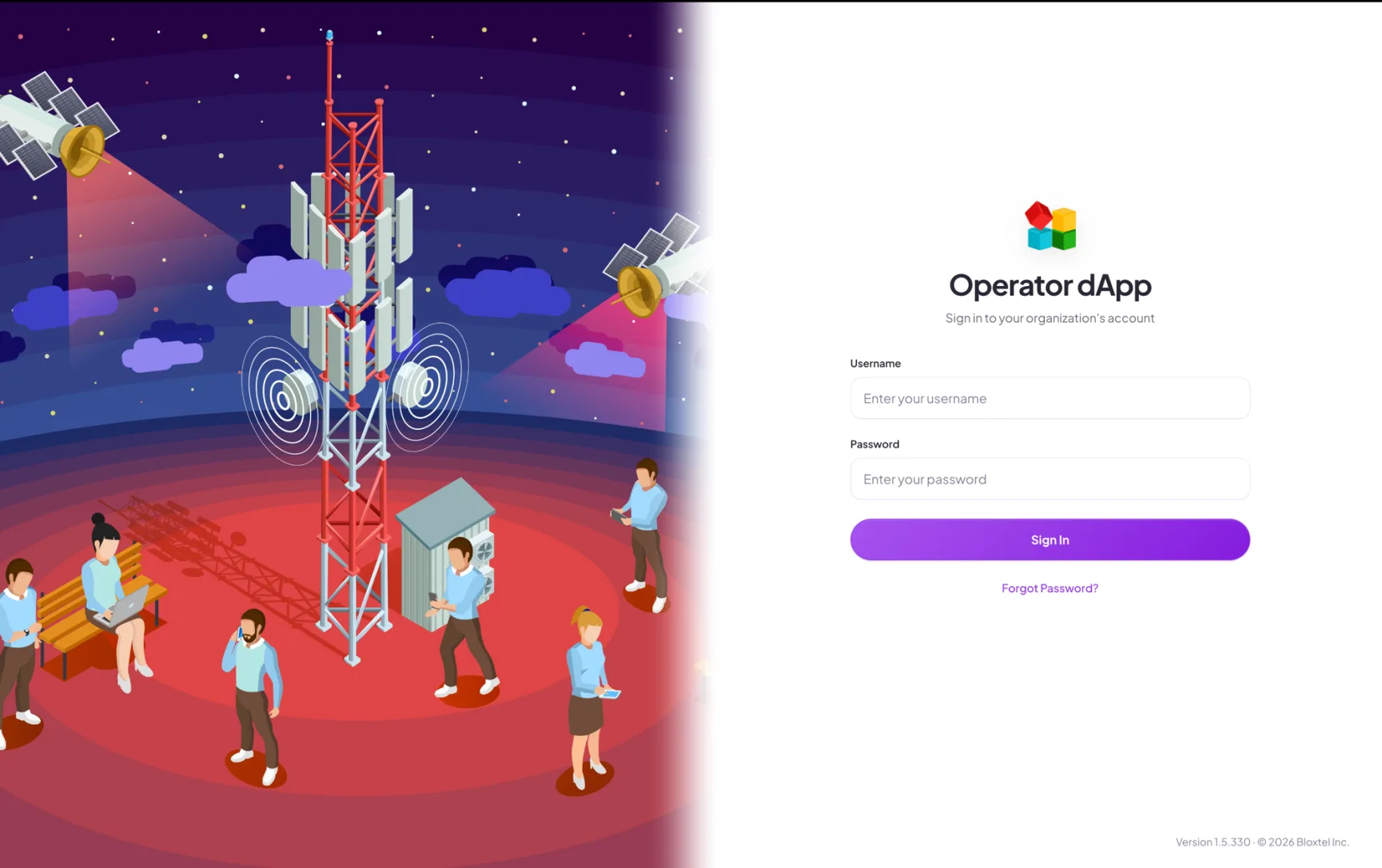
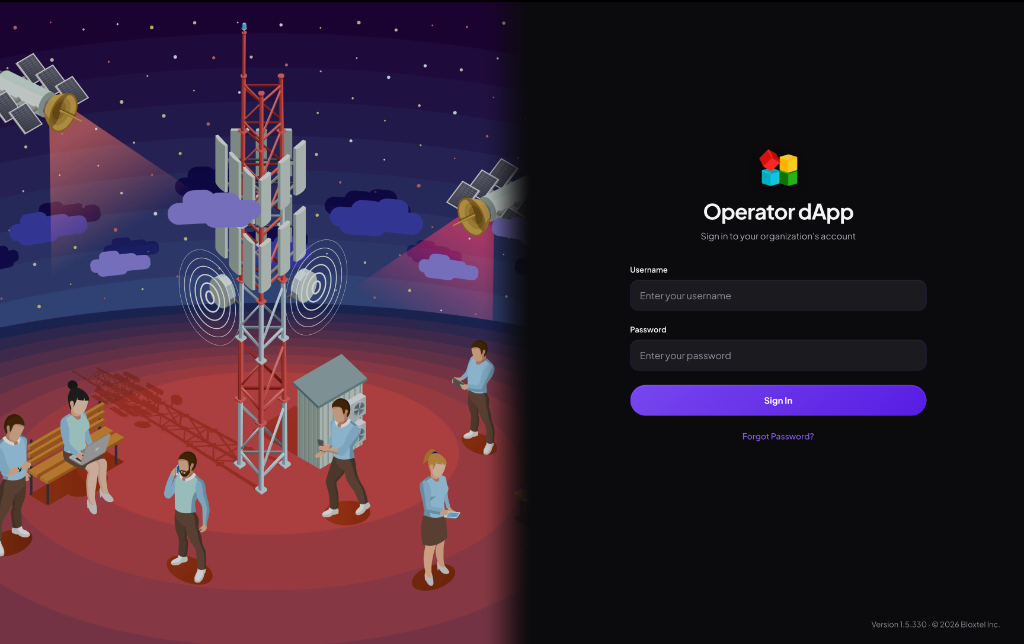
Run it.
Tech Specs
AP 201
Radio and spectrum6
- Band
- NR n48 (CBRS) 3.55–3.7 GHz, or NR n78 3.3–3.8 GHz On n48, channel and power are granted dynamically by a Spectrum Access System
- Radio
- Integrated gNB, CU and DU on-board 3GPP Release 16 radio
- Antennas
- Built-in 4x4 MIMO directional antenna, 8 dBi peak gain Four SMA connectors for external 5G antennas, plus one SMA for GPS
- Range
- 100 to 150 m radius, line-of-sight Common usage. Actual reach depends on the site and, on n48, on the transmit power the SAS grants.
- Capacity
- Up to 256 active devices Concurrent 5G standalone users on one access point
- Throughput
- 1.4 Gbps down, 200 Mbps up Maximum cell throughput on n78, DDDSU frame configuration, 4-layer down, 2-layer up, 256 QAM, at 100 MHz. On CBRS n48 at a typical 40 MHz channel: 550/75 Mbps
Core and network4
- 5G core
- 3GPP Release 17 standalone, on-box, with patented asymmetric-authentication support AMF · SMF · UPF · UDM · UDR · AUSF · NRF · PCF · NSSF · CHF · NEF
- User plane
- VPP with the UPG plugin over DPDK GTP-U termination, NAT44, dedicated isolated poll worker
- Network identity
- PLMN 901/23 Bloxtel's own ITU-assigned global PLMN; 315/010 for shared US CBRS deployments
- Network ports
- 1 × 2.5 Gb RJ45, 1 × 10 Gb SFP+ RJ45 carries management and the default uplink; SFP+ is an optional user-plane backhaul
Compute and software5
- Compute
- NXP LX2160A, 16 Arm cores DPAA2 network hardware, VFIO container partitioning
- Memory
- 32 GB Includes 1 GB hugepages reserved at boot for the gNB and user plane
- Operating system
- Ubuntu 22.04 LTS, arm64 PREEMPT_RT real-time kernel 5.15.71-rt51
- Security
- TEE-backed PKCS#11 key store ECDSA subscriber authentication; AP identity registered on-chain
- Management
- Bloxtel Operator dApp with remote dSIM® provisioning and built-in Graham AI Unattended package updates over a signed APT channel
Power and environment2
- Power
- AC 90–264 V or PoE++ (802.3bt) Under 80 W power consumption. Surge suppression: 6 kV power, 1 kV network interface
- Operating temperature
- −30 °C to 55 °C 95% relative humidity maximum, non-condensing
Enclosure and mounting7
- Dimensions
- 240 × 320 × 100 mm
- Weight
- Under 6 kg
- Enclosure
- IP65, fanless
- Mounting
- Wall or pole Mounting kit included
- Deployment type
- Indoor and outdoor
- Status indicators
- Four LEDs Power, service, status and GPS
- Timing and sync
- GPS, GLONASS, Galileo or PTP 1588v2 External GNSS antenna module
Questions
The ones we get asked most.
Is this real 5G?
Yes, 5G standalone: a 3GPP Release 16 radio with a Release 17 core. Most private “5G” on the market is 5G NSA, which still leans on 4G infrastructure underneath. 5G SA is fully independent of the older generation, and it is what the AP 201 runs.
What is CBRS?
Citizens Broadband Radio Service: the 3550 to 3700 MHz band the FCC designated for shared use in the United States. It has three tiers. Incumbents, including the Department of Defense, have priority. Priority Access Licenses sit beneath them, and General Authorized Access uses what is left. A Spectrum Access System arbitrates between the tiers in real time, which is what lets you run a licensed-grade network without buying spectrum.
Private 5G or Wi-Fi?
It depends on the site, and plenty of deployments run both. 5G gives more predictable and consistent performance where Wi-Fi suffers interference and congestion, and it handles range, mobility and device density better. Wi-Fi stays cheaper for undemanding coverage.
How is neutral hosting different from a DAS?
A distributed antenna system needs dedicated fiber or coax, complex RF design against licensed spectrum, and anywhere from days to years to deploy. Neutral hosting connects to the existing LAN, uses CBRS, is operational within hours, carries 40 to 60 percent lower total cost of ownership, and delivers higher in-building capacity.
Which blockchain does it use?
Bloxtel's smart contracts are deployed on Avalanche, a public distributed ledger. Subscriber identities and access point identities are minted as tokens on it, which is what makes ownership independently verifiable rather than taken on trust. The ledger records ownership only. It never carries subscriber data.
How is it priced?
A setup fee scaled to the number of Access Points, plus a monthly subscription per access point. Terms run from no commitment to long contract, and volume discounts are available. Tell us about the site and we will quote it.
Ready to proceed?
Deploy your own private 5G network.
Tell us about the site: the coverage you need, the devices you're connecting, and how you'd like it managed. We'll show you the AP 201 running.